Mixed Media
Ways of Knowing
My mixed media work centers on ways of knowing—how we learn to see the world, and how those ways of seeing shape what and how we value, organize, and control it.
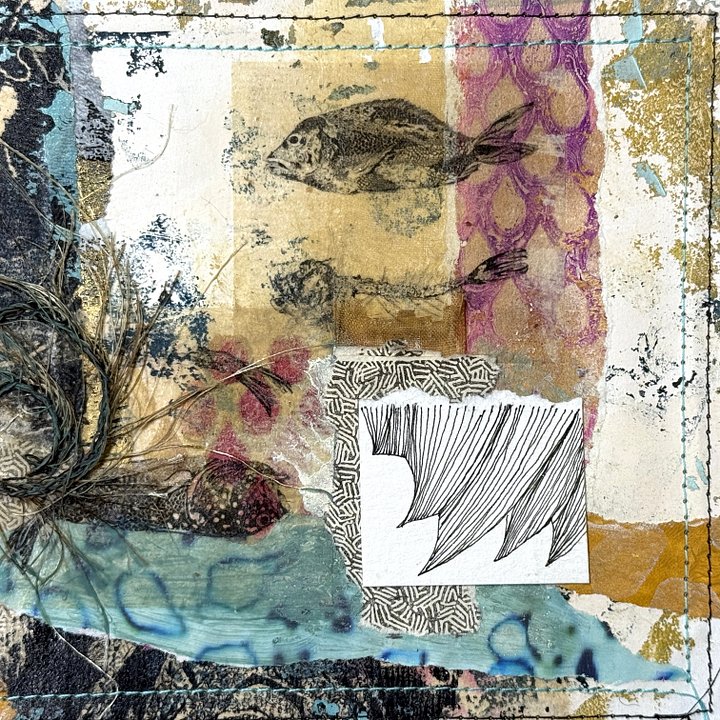
Much of my work incorporates the visual language of scientific illustration: fish, insects, plant forms, diagrams, and fragments of the body. Images many of us recognize as conveying authority and truth.
But I’m interested in what those images do, not just what they show.
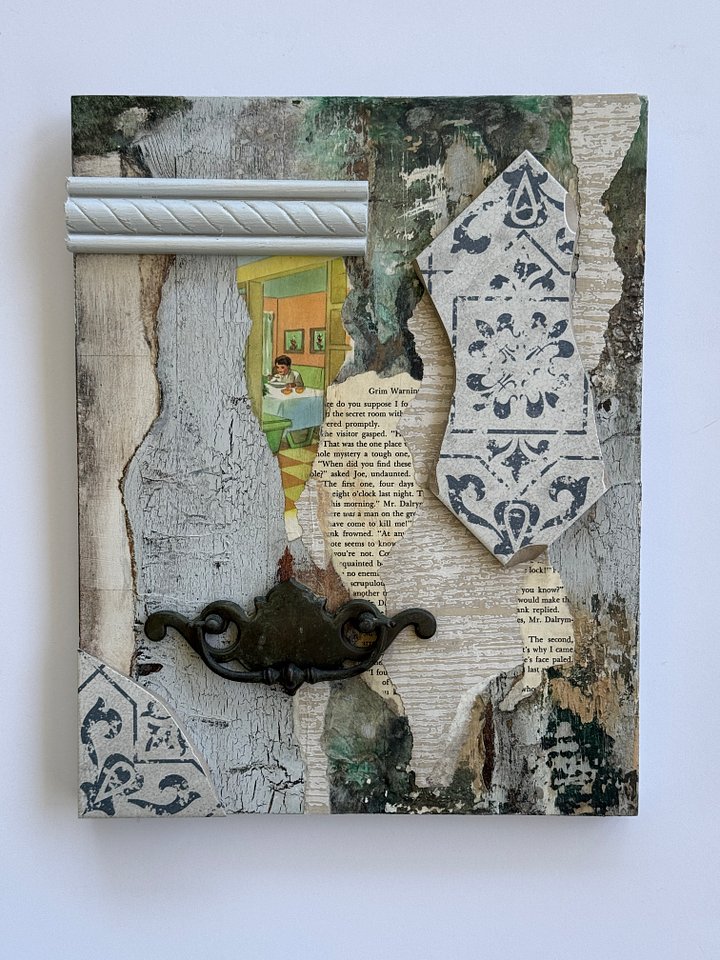
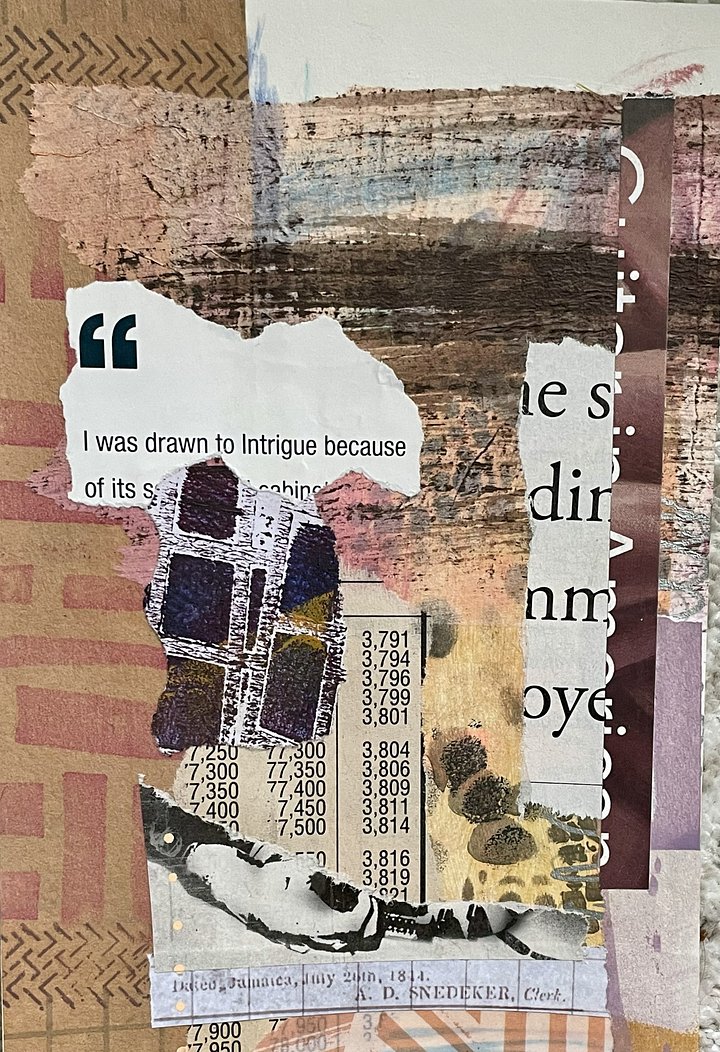
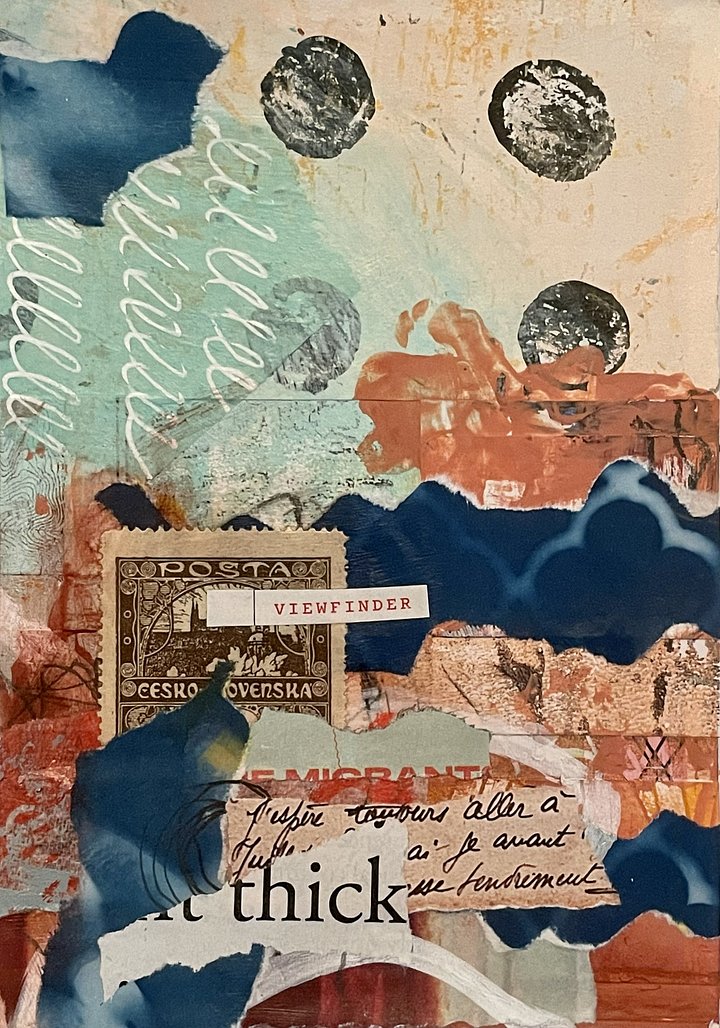
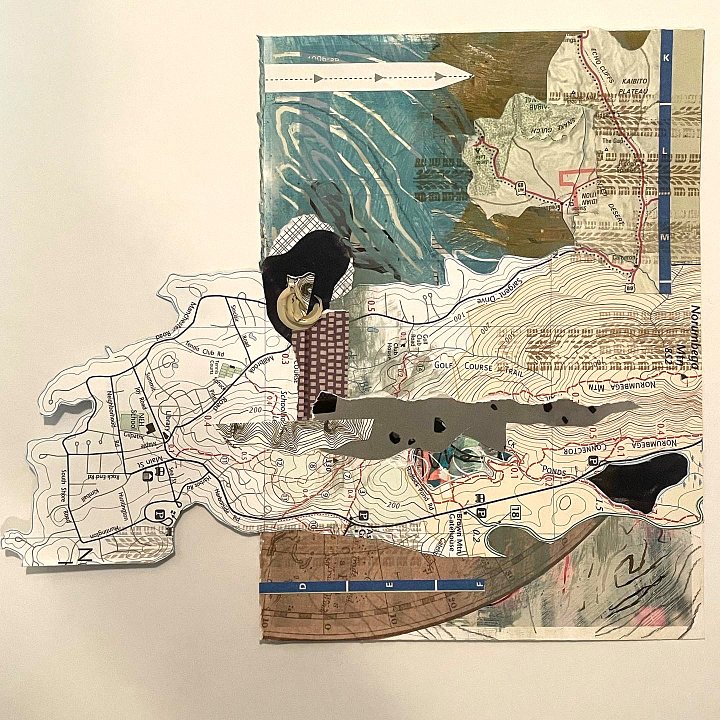
Drawing has long been a tool for understanding the natural world, evolving from observation into systems of naming and classification that shape how life is understood and managed. My work places these images alongside less precise artistic processes: experimental printmaking, collage, improvised textiles, and mark-making. By layering, disrupting, and reassembling, I create tension between order and instability.
Through this process, I explore what happens when we loosen the structures that taught us how to see—and what happens when knowledge remains fluid, layered and alive.
Gallery




Layering Knowledge
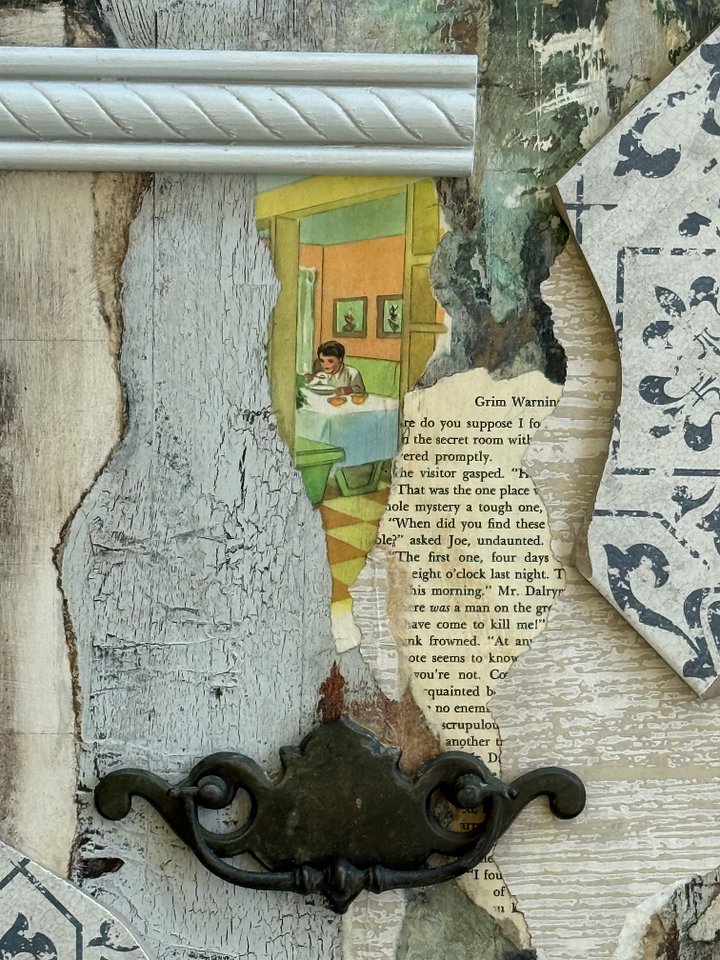
Much of this work centers on a simple shift: seeing becomes knowing, and knowing can become a form of control. Scientific images—of insects, fish, and the body—have long helped turn living systems into things that can be named, compared, and managed. My process gently disrupts that approach. I tear, layer, stitch, and obscure, allowing images to overlap and resist easy categorization. Textiles and found organic textures introduce softness into otherwise precise forms.
I work across collage, experimental printmaking, assemblage, mark making, and watercolor, using paper, fabric, and found materials. Most pieces are small and intimate—ranging from 4 × 6 inches to 15 × 18 inches—with some textile-based works extending to 24 × 12 inches. These shifts in scale and material reflect a core idea: that knowledge is not fixed or contained, but layered, evolving, and open to reinterpretation.